If you are buying a luxury loft or condo in the West Loop, it is easy to get drawn in by soaring ceilings, skyline views, and polished amenity spaces. But in this part of Chicago, the smartest buyers know that the unit itself is only part of the story. You also need to understand the building, the block, and the ownership details that can shape your day-to-day experience and long-term value. Let’s dive in.
West Loop Luxury Housing Basics
The West Loop sits within a dense, highly urban part of the Near West Side, and the housing mix reflects that. CMAP data shows that 66.0% of housing units in the area are in buildings with 20 or more units, while 22.1% were built in 2010 or later and 20.5% were built before 1940. For you as a buyer, that usually means a real mix of older loft conversions and newer condominium buildings with more expansive amenity packages.
This is also a market where urban convenience matters. In the same CMAP snapshot, 25.3% of workers walk or bike to work, 14.0% use transit, 26.9% work from home, and the mean commute time is 25.3 minutes. That helps explain why location, parking, access, and noise levels can matter just as much as square footage.
A recent neighborhood market page described the West Loop as a seller’s market in March 2026. In practical terms, that means well-positioned homes can move quickly. If you are serious about buying, it helps to have your financing lined up, your document review process ready, and your must-haves clearly defined.
Know the Difference Between Lofts and Condos
Older lofts offer character
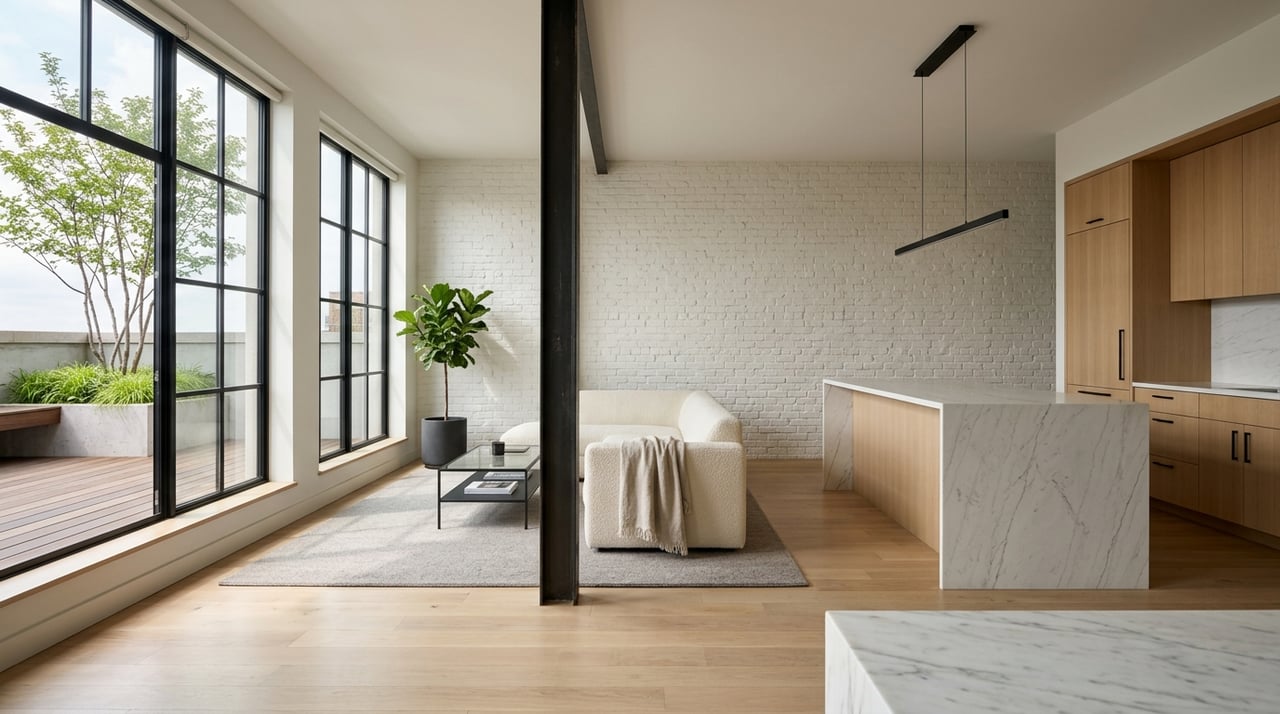
Many West Loop loft buildings come from the area’s former industrial, warehouse, and office history. Chicago’s Landmarks program notes that buildings such as 300 West Adams Street reflect the expansion of Chicago’s office district into former warehouse areas along the river during the 1920s. That history still shows up today in homes with exposed brick, heavy timber, large windows, and higher ceilings.
If you love architectural character, an older loft can be a compelling choice. You may get a home with a strong sense of place and design details that are hard to replicate in new construction. At the same time, each building may have its own quirks around layouts, sound transfer, mechanical systems, and maintenance needs.
Newer condos focus on amenities
Newer luxury condos in and around the West Loop often emphasize service, finishes, and lifestyle amenities. Depending on the building, that may include staffed entrances, fitness spaces, lounges, outdoor decks, or other shared features. These buildings can deliver a more turnkey experience, but that convenience usually comes with a different cost structure.
For buyers, the key question is not simply whether the building has amenities. It is whether the monthly assessment matches the value you place on those amenities and whether the building is managing those shared costs responsibly.
Why the Building Matters as Much as the Unit
A condo purchase in Illinois is not just about buying the interior space. Under Illinois law, each owner pays a proportionate share of common expenses based on their ownership interest in the common elements. Real estate taxes and special assessments are also levied against each unit and its common-element interest.
That means your monthly assessments, reserve funds, and building finances deserve as much attention as the kitchen finishes or the view. A beautiful unit in a poorly run building can become expensive fast. A well-managed building with stable planning can help protect your experience and future resale position.
Review Assessments and Reserves Carefully
Illinois law requires condominium budgets adopted after July 1, 1990 to provide for reasonable reserves for capital expenditures and deferred maintenance. In setting reserve levels, boards must consider expected repair and replacement costs, useful life, any independent reserve study, the effect of increases on owners and unit values, and the association’s ability to obtain financing or refinancing.
Associations can waive reserves by a two-thirds vote, but that waiver must be disclosed in the financial statements and highlighted for prospective purchasers. That is a major detail to watch. If reserves are low or waived, you should understand what that could mean for future projects and the possibility of special assessments.
Here are a few questions worth asking early:
- What does the monthly assessment cover?
- How have assessments changed over time?
- Are reserves fully funded, partially funded, or waived?
- Is there a current reserve study?
- Have there been special assessments or major repairs?
- What capital work is expected in the next one to two fiscal years?
Use Illinois Resale Disclosures to Your Advantage
Illinois gives resale condo buyers a strong set of documents to review. On a resale, the association must provide information such as the declaration, bylaws, status of liens and assessments, anticipated capital expenditures for the current or next two fiscal years, reserve-fund status, the latest financial statement, pending suits or judgments, insurance coverage, and a statement about prior alterations.
The association’s principal officer must furnish that information within 10 business days of a written request, and the association may charge up to $375, plus a $100 rush fee. For you, this document package is not a formality. It is one of the best tools you have for understanding whether a building is being run with care and transparency.
When you review those documents, focus on patterns as much as line items. Stable budgets, clear planning, and thoughtful disclosures often tell you more than a flashy lobby ever could.
Watch for Landmark Status and Future Changes
West Loop buyers should pay close attention to landmark status and nearby development activity. If a building is a Chicago Landmark or sits within a landmark district, exterior alterations, additions, demolition, and new construction affecting significant historic or architectural features are reviewed through the city’s landmark permit process. In landmark districts, that usually applies to exterior elevations visible from the public right-of-way.
This matters if you think you may want to replace windows, alter a terrace, or add rooftop elements later. Routine maintenance may not trigger separate landmark permits, but visible exterior work can still be reviewed. If flexibility for future changes matters to you, ask about this before you buy.
The broader neighborhood also continues to evolve. The City of Chicago maintains a West Loop community update feed, and recent zoning files show continued planned-development activity in Fulton Market addresses, including PD 1511 at 1215 W. Fulton Market. For you, that means views, light, construction exposure, traffic flow, and noise should all be part of your evaluation.
Evaluate the Block, Not Just the Building
In the West Loop, a great purchase decision usually comes from studying the surroundings as carefully as the home itself. Because the neighborhood blends older conversions, newer high-rises, and active development, the block can have a major effect on your lifestyle and resale.
Pay close attention to:
- Current and possible future construction nearby
- View corridors and how protected they appear
- Street activity and delivery traffic
- Transit access and commuting patterns
- Parking setup and guest parking options
- Storage rights and any roof or terrace rules
The Fulton-Randolph Market Landmark District is also an important long-term planning factor. A city report says the 2015 designation covers 74 acres, 142 properties, and 86 contributing buildings. That kind of preservation framework can help maintain historic character, while also shaping what may be altered or built nearby.
Ask About Rules That Affect Resale
Because the Near West Side is renter-heavy overall, with 65.3% renter-occupied units at the community-area level, it is smart to ask each building about occupancy and leasing rules. These rules can affect your future flexibility, financing comfort, and resale pool.
Be sure to ask about:
- Rental caps
- Owner-occupancy ratios
- Short-term rental restrictions
- Pet policies
- Smoking rules
- Parking and storage assignments
- Terrace, balcony, or rooftop use rights
These may sound like small details during a showing, but they can become major factors once you own the home or later decide to sell.
What Often Supports Long-Term Value
In a neighborhood with varied building types and ongoing development, durable value usually comes back to fundamentals. Research for the area suggests that building reputation, assessment stability, reserve health, parking and storage rights, floor-plan efficiency, natural light, view protection, and upkeep quality tend to matter most over time.
That is why buying well in the West Loop is not just about finding the most dramatic finishes. It is about identifying the building and location that fit how you live now while also supporting your next move later.
Buy With a Clear Process
A strong luxury condo or loft purchase in the West Loop usually starts with a disciplined approach. The most successful buyers tend to move beyond first impressions and compare homes through the lens of ownership structure, financial health, and future change.
A practical buying process often looks like this:
- Define whether you prefer loft character or newer condo amenities.
- Narrow your search by block, building type, and commute priorities.
- Review assessments in the context of services and reserves.
- Study resale disclosures carefully.
- Ask about rental rules, alterations, and planned capital work.
- Evaluate nearby development that could affect views, noise, or convenience.
In a market where good units can move quickly, clarity gives you an edge. When you know what matters most, you can act decisively without skipping the due diligence that protects you.
If you are weighing a luxury loft against a newer condo in the West Loop, a thoughtful review of the building is every bit as important as the residence itself. The right purchase should feel polished on day one and still make sense on paper years from now. For private guidance on evaluating West Loop luxury condos and lofts, connect with Jody Dickstein.
FAQs
What should you review before buying a West Loop condo resale?
- You should review the association’s declaration, bylaws, assessment status, reserve-fund status, latest financial statement, anticipated capital expenditures, insurance coverage, pending suits or judgments, and any statement about prior alterations.
Why do monthly assessments matter in a West Loop luxury building?
- Monthly assessments matter because Illinois condo ownership includes a proportionate share of common expenses, and those fees often reflect building operations, amenities, maintenance planning, and reserve funding.
How can landmark status affect a West Loop loft or condo?
- Landmark status can affect future exterior changes, including certain window, terrace, rooftop, or other visible alterations that may require review through Chicago’s landmark permit process.
Why should you ask about rental rules in a West Loop building?
- Rental caps, owner-occupancy ratios, and short-term rental rules can affect your flexibility as an owner, the building’s overall profile, and how easily the home may resell in the future.
What helps protect resale value in the West Loop?
- Buyers often look closely at building reputation, assessment stability, reserve health, parking and storage rights, floor-plan efficiency, natural light, view protection, and overall upkeep quality.